
HUSH Roblox Trading Guide: Blackmarket and Item Sales
Trading in HUSH Zombie Extraction on Roblox occurs through direct lobby exchanges in the Market TRADE tab, cross-server listings on the Cash-based Blackmarket, and item liquidation to hideout NPC traders.
Trading in HUSH Zombie Extraction on Roblox occurs through direct lobby exchanges in the Market TRADE tab, cross-server listings on the Cash-based Blackmarket, and item liquidation to hideout NPC traders.
Blue Code Studios provides multiple distinct economic channels inside the hideout and lobby menus. Surviving players convert extracted extraction haul into in-game Cash, barter weapon finishes with squadmates, or offload surplus field supplies to dedicated vendor stalls.
Player-to-Player Trading in the Market
The Market interface features a dedicated TRADE tab designed for direct bartering between players gathered in the lobby. This peer-to-peer system allows two survivors to build bilateral offers without entering a raid.
Both parties can insert items, weapon crates, weapon finishes, and in-game Cash into the exchange window. When dealing with cosmetics, finishes opened or scanned in raids carry a 10% chance to possess TALLY tracking. TALLY finishes record infected kills completed during live raids, display those kill counters to squad members, and retain their cumulative kill statistics after being transferred to another player through the trade window.
Both participants must actively review the finalized offer window and press confirm before any inventory items or Cash balances change hands. If either participant modifies an offer during the review phase, the confirmation resets to prevent accidental or fraudulent transfers.
Listing Loot on the Blackmarket
The Blackmarket operates as a cross-server auction house where players list gear for sale to other survivors using in-game Cash. Access to the Blackmarket requires completing three finished raids on any map.
To view current community offers, survivors navigate to MARKET, select BLACKMARKET, and open the BROWSE tab. The search filter allows queries by exact item name or gear categories such as weapons and equipment. Listings show a starting asking price and total quantity available. The prices shown on these cards represent listing-specific asking costs set by independent sellers rather than standard NPC base values.
Every player receives a baseline quota of 3 active market listings per day. Unsold goods remain active until purchased or reclaimed back into player storage. High-tier firearms such as the AVK-62 or hunting rifles frequently yield substantially higher Cash returns when listed on the Blackmarket compared to selling directly to hideout merchants.
| Trading Method | Best Used For | Operating Requirements |
|---|---|---|
| Direct Trade Tab | Exchanging finishes, cases, or gear directly with lobby players | Both participants review and lock offers in the lobby |
| Blackmarket Listings | Selling rare firearms and valuable gear across servers for Cash | Requires 3 finished raids; limited to 3 daily listings by default |
| NPC Trader Liquidation | Immediate Cash payout for medical items, scrap, and bulk weapons | Items must reside in hideout storage and match vendor categories |
Selling Items to Hideout NPC Traders
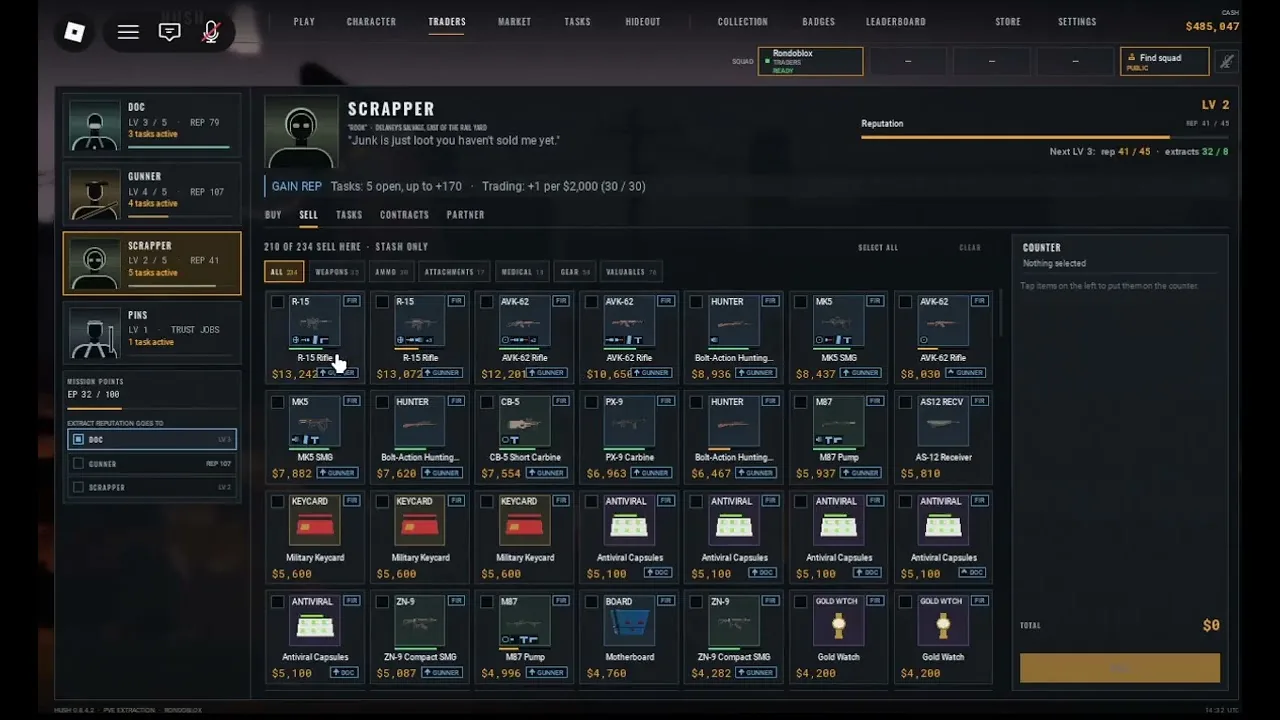
Hideout vendors provide instant Cash payouts for extracted items without waiting for player buyers. Each merchant specializes in specific commodity groups and refuses categories outside their designated trade:
- Doc: Buys medical supplies including Bandages, Pills, and Antiviral Capsules. Doc does not purchase weapons or miscellaneous scrap.
- Gunner: Buys firearms, magazines, and weapon attachments. Gunner offers the primary outlet for surplus guns from a weapons guide loadout.
- Scrapper: Buys salvage components, tools, jewelry, and rings. Scrapper pays competitive rates for valuable finds like gold rings and also sells field containers such as the Duffel Bag.
- Rook: Buys electrical components like batteries, fuel cans, duplicate collectible VHS tapes, and specialized keys such as the Mayor's Safe Key.
Traders only evaluate and purchase items located within the hideout STASH grid. Equipment placed in active pockets, chest rigs, or backpacks carried on the player model cannot be sold until moved into storage. Efficient stash management ensures items sit in unequipped container rows before speaking to a vendor.
Game Passes Affecting Trade Economy
Certain optional account upgrades purchased through the store permanently alter selling rates and daily transaction caps. These upgrades apply account-wide across all raids:
The FIXER pass costs 499 Robux and increases the standard Blackmarket listing cap from 3 items per day up to 12 items per day. This expansion benefits players running frequent loot extractions who generate large volumes of excess gear.
The VIP pass costs 599 Robux and grants a permanent 10% bonus payout on every sale completed with NPC traders like Doc, Gunner, Scrapper, and Rook. VIP also adds a unique title to the player profile. Players referencing the official gamepasses index can weigh these economic perks alongside container expansions.
Maximizing Profit from Raid Extractions
Turning scavenged gear into stable Cash reserves requires matching each item to the correct distribution method. New survivors following a beginner guide can establish a routine by separating finds immediately after returning through an extraction point.
Valuables such as jewelry and watches yield predictable cash when sold to Scrapper, while batteries and fuel should be reserved for Rook's requisitions or hideout upgrades. Functional assault rifles and rare weapons yield the highest return when held for player buyers on the Blackmarket rather than accepting standard merchant rates. Medical supplies and common ammunition should remain in stash storage to supply subsequent deployments.