
HUSH Roblox The Witness calming Tactics and Boss Stealth
Calming The Witness and handling high-threat infected in HUSH requires resetting enemy audio aggro through broken line-of-hearing, shutting doors, and switching to silent blades rather than firing weapons. Staying quiet halts alert chains before audio-sensitive targets overwhelm your extraction squad.
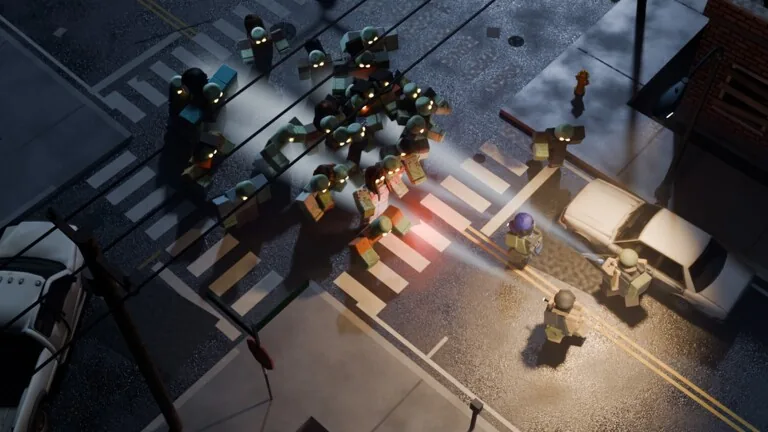
Calming The Witness and handling high-threat infected in HUSH requires resetting enemy audio aggro through broken line-of-hearing, shutting doors, and switching to silent blades rather than firing weapons. Staying quiet halts alert chains before audio-sensitive targets overwhelm your extraction squad.
Sound Mechanics and Infected Perception
In HUSH [Zombie Extraction] by Blue Code Studios, the primary hazard comes from enemy auditory perception. Quarantined Stillwater features infected variants such as blind Listeners, Brutes, Runners, Screamers, and five distinct bosses. The infected lack functional sight, focusing their movement entirely on acoustic signals produced by players.
The developer summarizes combat encounters with the rule that every shot rings the dinner bell. Firing unsuppressed weapons alerts every hostile unit within earshot. In contrast, crouched movement, closing interior doors, and employing melee blades and firearms selectively allow survivors to navigate corridors without triggering area-wide alerts. Managing sound output remains the primary mechanic for suppressing aggro states during boss room transitions.
Tactics for Calming Boss Aggro and Disengaging
When intense combat draws aggressive infected or alerts boss-tier threats, survival depends on breaking auditory contact immediately. Enemies pursue the exact location of recent loud audio events. Moving away from the sound origin point while staying crouched forces alerted enemies to search the abandoned area instead of chasing players.
Closing doors behind your squad acts as a direct line-of-hearing barrier. Physical doors obstruct enemy paths and deaden step sounds between rooms. When deploying solo, quiet movement becomes mandatory, as a single player cannot divide enemy attention across multiple targets. In team play of up to four survivors, maintaining collective noise discipline prevents isolated errors from triggering chain reactions across the entire sector.
Tactical Response Decision Matrix
| Tactical Choice | Best Situation | Operational Cost |
|---|---|---|
| Silent Blade Attack | Eliminating isolated patrols and blind Listeners | Requires close contact and increases takedown duration |
| Door Closure and Sneaking | Breaking pursuit when boss or mob aggro spikes | Slows squad movement and drains the extraction timer |
| Loud Weapon Firefight | Clearing blocked extraction gates under time pressure | Draws all nearby hostiles and triggers reinforcement waves |
Raid Countdown Rules and Secure Containment
Raid duration varies by selected difficulty setting. Raids last 20 minutes on Normal, 23 minutes on Hard, and 25 minutes on Nightmare. When tracking exits across Stillwater map routes, teams must budget sufficient time to handle stealth detours. Evading pursuit by closing doors or waiting for an enraged enemy to lose interest consumes minutes from the active countdown.
Failing to reach an exit before the timer expires, or dying to infected during an encounter, causes the loss of all equipped gear and bag contents. Only items placed inside the secure container return to base safely. Players minimize loss before attempting high-tier operations like The Witness on Nightmare by moving vital medical supplies and rare barter items into secure cells early, keeping additional backups by organizing your stash between drops.